
Have you ever had to sit across from one of your best drivers and try to explain why you’re installing cameras in their cab? Have you felt that immediate wall of defensive energy, the “Big Brother” comments, and the underlying fear that their privacy is being stripped away? If you’re a fleet manager in today’s landscape, these conversations aren’t just common, they are often the biggest hurdle to upgrading your safety technology.
The resistance is understandable. No one likes the feeling of being watched while they work. But the reality of modern fleet management is that the road has become a high-stakes legal and financial battlefield. When an incident occurs, the first person to be blamed is almost always the professional driver behind the wheel of the heavy vehicle.
It’s time to change the narrative. Video telematics isn’t a “spy” in the cab; it is quite literally a digital shield for your drivers. It’s the difference between a career-ending lawsuit and a clear exoneration.
Why is there such a massive gap between perception and reality?
The friction usually stems from a misunderstanding of how the technology actually works. Drivers often imagine a supervisor sitting in a dark room, watching their live feed for eight hours straight, waiting for them to take a sip of water or scratch their head.
In reality, video telematics systems are event-driven. They aren’t designed to “watch” people; they are designed to “identify” risk. Most modern systems, like those we integrate at My Fleet. The camera only flags and uploads footage when a specific safety event is triggered, such as harsh braking, a sudden swerve, or signs of extreme fatigue.
Unless something happens that shouldn’t, the footage usually remains unviewed or is overwritten. It’s not about micromanaging; it’s about having an objective witness when things go wrong.

What happens when it’s your driver’s word against a witness?
We’ve all seen it happen. A passenger car cuts off a truck, the truck driver slams on the brakes but can’t stop 40 tonnes in time, and a collision occurs. The witness at the scene sees a “speeding truck” hitting a “small car.” Without video evidence, the legal system and insurance companies often default to blaming the heavy vehicle.
This is where the “shield” comes into play. Video telematics provides irrefutable proof. It captures the car cutting in, the lack of indicators, and the driver’s rapid reaction time. According to industry data, fleets using video telematics report that up to 80% of their incidents result in driver exoneration.
When you frame it this way to your team, the conversation shifts. You aren’t installing a camera to catch them doing something wrong; you’re installing it to prove they did everything right. For any driver worth their salt, having an “on-board witness” is the ultimate job security.
Is your safety strategy reactive or proactive?
Many fleet managers are still stuck in a reactive loop. They wait for an accident to happen, then they look at the data to see what went wrong. But why wait for the crash?
Advanced video telematics, particularly video telematics for construction fleets, uses AI to detect fatigue and distraction in real-time. If a driver’s eyes start to close or if they are looking at a mobile device for an extended period, the system provides an immediate in-cab alert.
Think about the long-haul routes across Australia. On those desolate stretches, fatigue is a silent killer. An audible alert that says, “Hey, take a break,” isn’t an intrusion: it’s a life-saving intervention. It helps the driver get home to their family safely. By addressing these habits before they lead to an accident, you are building a culture of care, not a culture of consequence.

How do you address the privacy “elephant in the room”?
Privacy is the most common point of contention, and if you don’t address it head-on, your implementation will fail. You need to be transparent about what the cameras can and cannot do.
- Work Hours Only: Modern systems can be configured to stop recording or shutter the lens the moment the ignition is turned off or the driver logs out of their shift. This ensures that their private time in the sleeper cab remains exactly that: private.
- Triggered Recording: Explain that the “red light” only goes on when the AI detects a high-risk event.
- Data Security: Ensure your drivers know that the footage is encrypted and only accessible by authorised safety personnel, not just anyone in the office.
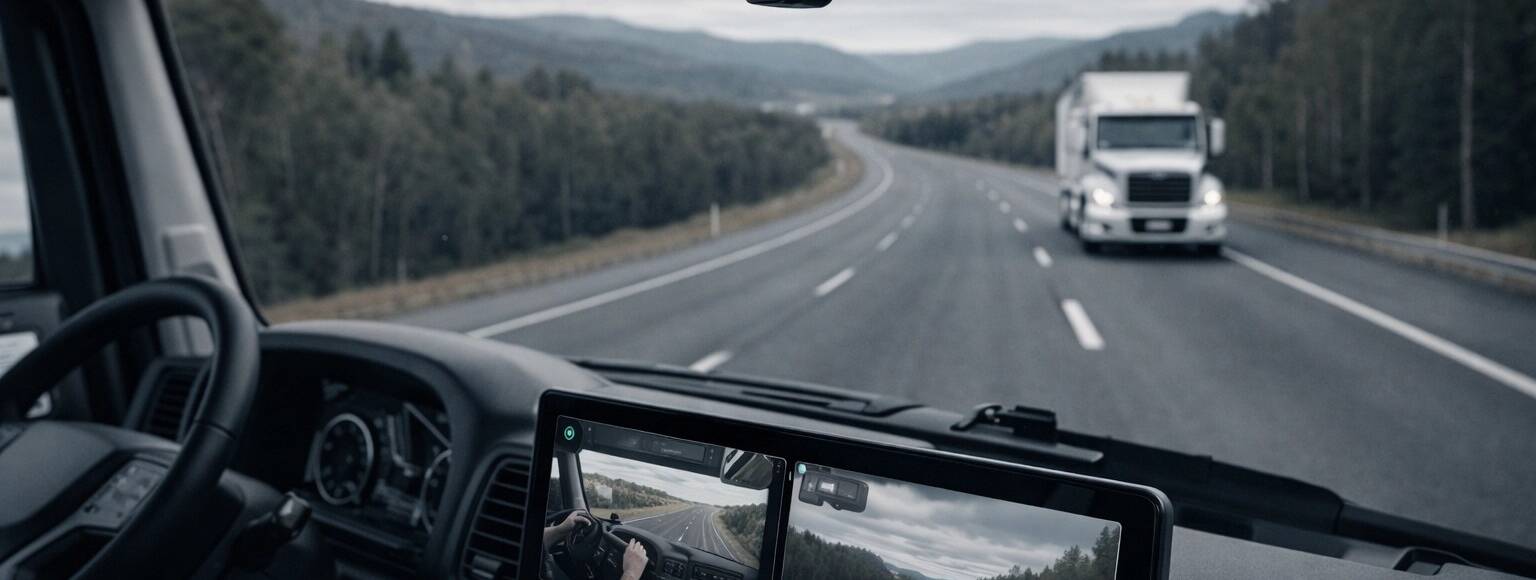
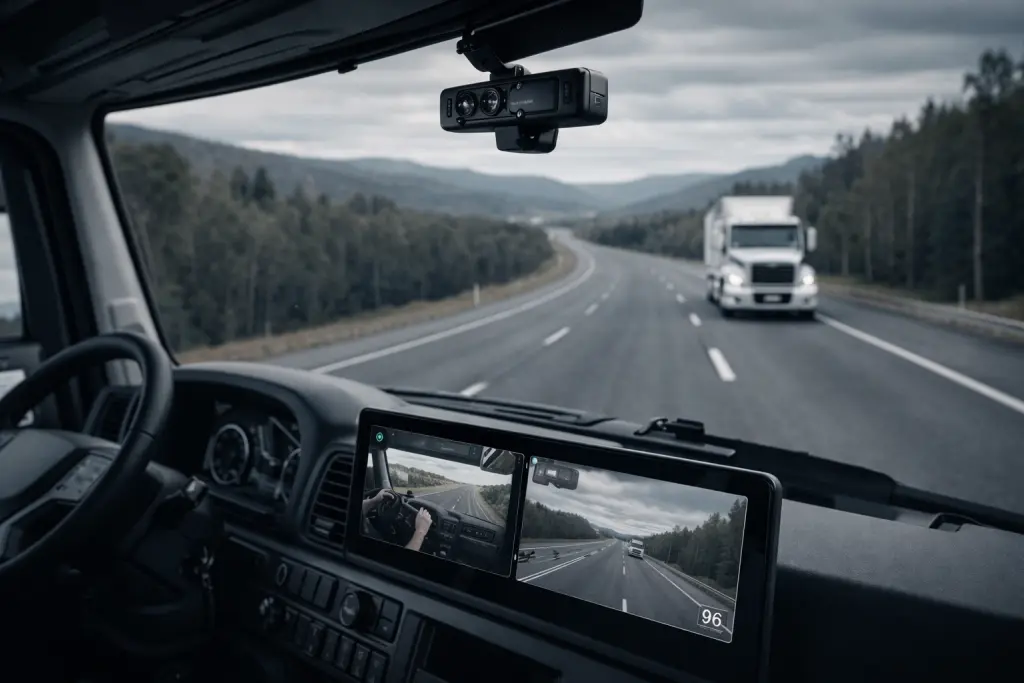
Using multi-angle feeds also helps contextualise the driver’s actions. If a driver-facing camera shows a driver swerving, the exterior-facing cameras can show that they were avoiding a pedestrian or a loose animal. Without both angles, the driver might look reckless; with both, they look like a hero.

Can technology actually improve your bottom line and driver retention?
You might think that adding “surveillance” would increase driver turnover, but the opposite is often true when the system is handled correctly. When drivers feel protected from unfair blame, they feel more supported by their employer.
Furthermore, the data collected from these systems allows for fairer incentive programs. Instead of guessing who your best drivers are, you have the metrics to prove it. You can reward the drivers who consistently maintain safe following distances and handle the vehicle with care.
From a business perspective, the ROI is undeniable. Beyond the fuel savings mentioned in our telematics hacks, video telematics drastically reduces insurance premiums. When an insurer knows you have “eyes on the road” and “eyes in the cab,” your risk profile drops. This freed-up capital can be reinvested back into better equipment, better facilities, and better pay for your team.
How do you sell this to your drivers?
If you simply announce, “We are installing cameras on Monday,” you will face an uphill battle. Here is a more effective approach:
- Lead with Exoneration: Tell them stories of drivers in other fleets who were saved from jail time or massive fines because they had video evidence.
- Show, Don’t Just Tell: Set up a demo unit in the breakroom. Let them see what the camera sees. Let them trigger a “fatigue” alert so they understand it’s a tool, not a person watching them.
- Collaborate on Policy: Ask for their input. What are their specific concerns? Can you agree on a policy where footage is deleted after 30 days if no incident is reported?
- Focus on Professionalism: Position the technology as a tool for the “Elite Driver.” Modern transport and logistics solutions are part of a high-tech industry. Being comfortable with this tech makes them more valuable professionals.

Is it time to stop the “Spy” narrative?
At the end of the day, your drivers are your most valuable asset. They operate expensive machinery in dangerous environments, often with very little support. Video telematics provides that missing layer of support.
Alarm bells should be ringing for any fleet manager still relying on paper logs and “he-said, she-said” incident reports in 2026. The world has moved on, and the legal environment is more litigious than ever.
By framing video telematics as a shield, you aren’t just protecting your company’s bank account: you are protecting your drivers’ livelihoods and reputations. It is an investment in truth, safety, and the long-term sustainability of your fleet.
Are you ready to give your drivers the protection they deserve?
At MyFleet, we specialise in implementing video telematics solutions that drivers actually appreciate. Let’s talk about how we can help you bridge the gap between safety and privacy.
Explore our full range of Telematics Solutions or contact us today for a consultation.