
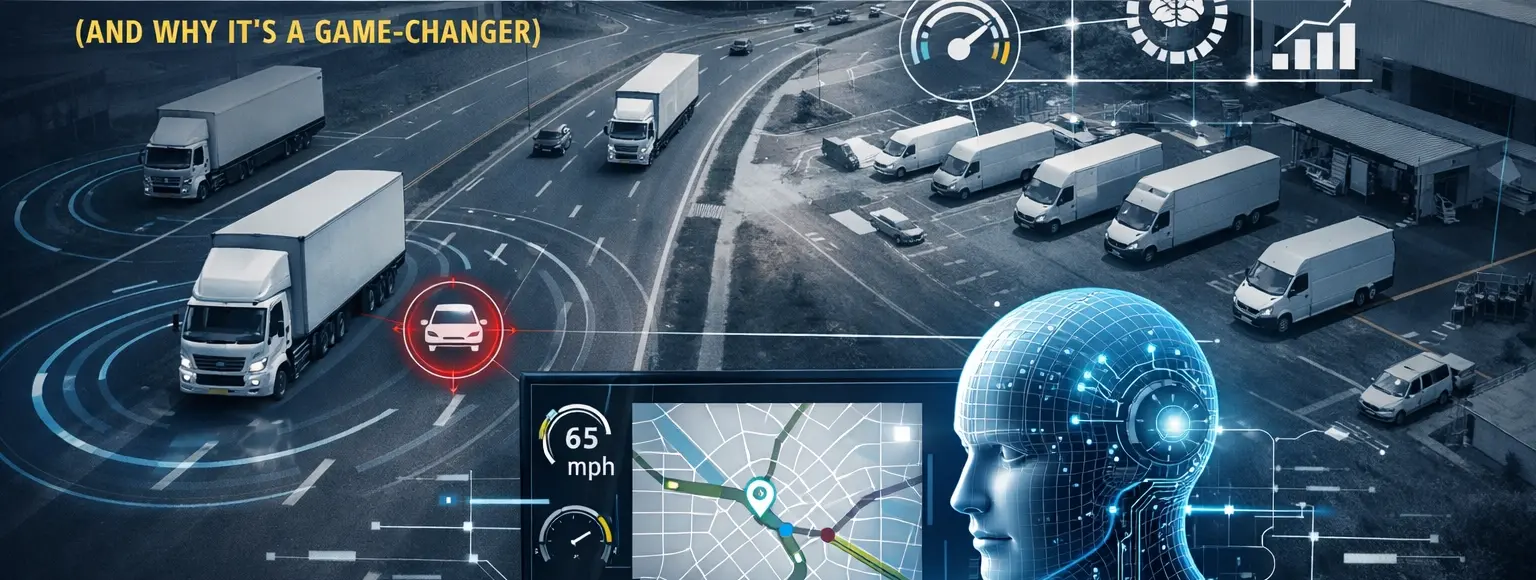
You’ve got telematics tracking your vehicles. You can see where every truck is, monitor fuel consumption, and pull up historical reports. But here’s the question: is your system telling you what’s about to happen, or just showing you what already did?
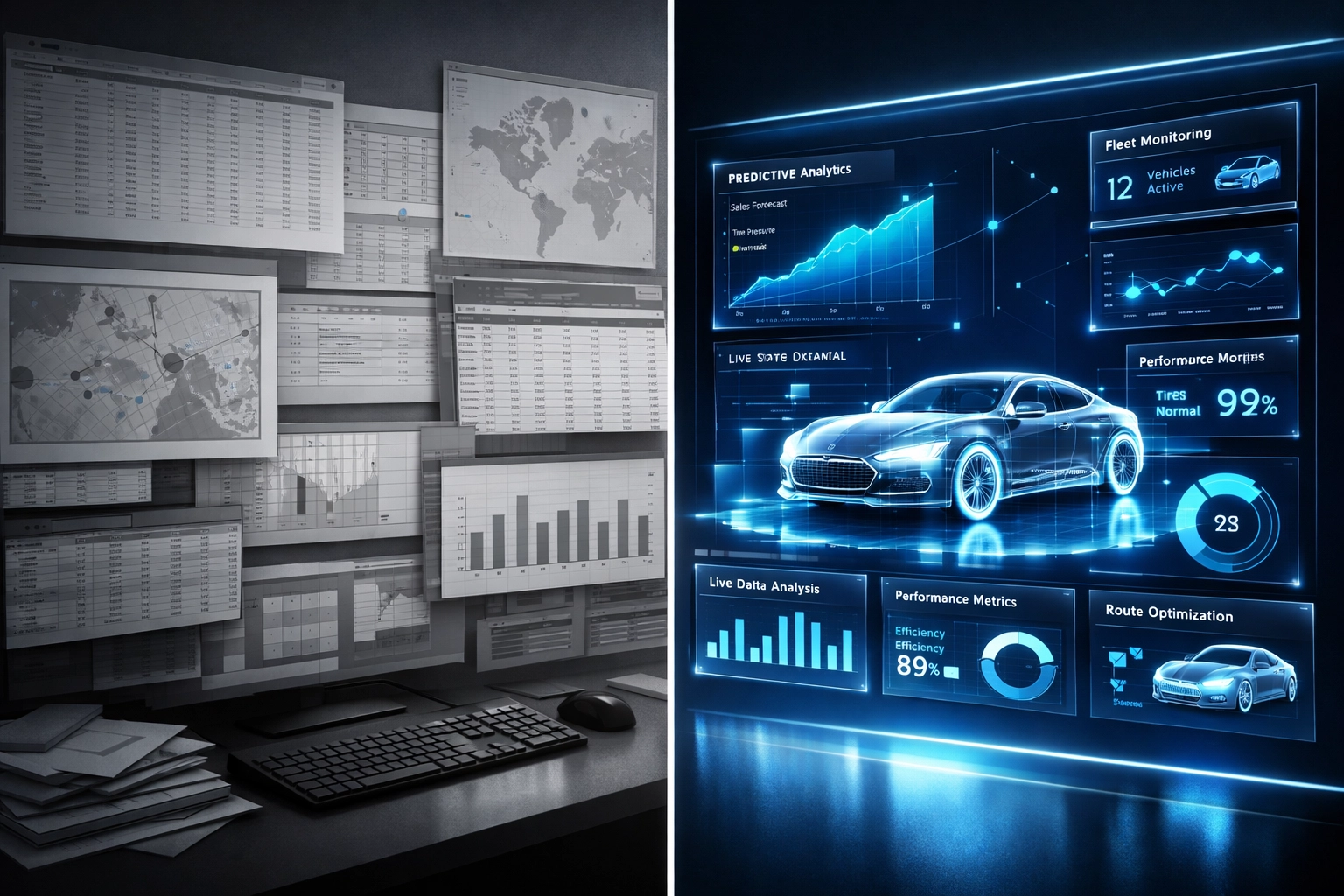
That’s the fundamental difference between traditional telematics and AI-powered fleet intelligence. One gives you a rearview mirror. The other gives you a crystal ball: and the ability to act on what you see.
If you’re still relying on basic GPS tracking and manual analysis to run your fleet, you’re not just behind the curve. You’re burning money, risking safety incidents, and probably spending your weekends buried in spreadsheets. Let’s fix that.
What Traditional Telematics Can’t Do (And Why That Should Worry You)
Your current telematics system is pretty good at the basics. It tracks location, logs driving hours, and maybe sends an alert when a driver speeds. But that’s reactive data: you’re finding out about problems after they’ve already cost you time and money.
Traditional systems can’t predict when a vehicle’s about to break down before the engine light comes on. They can’t identify patterns in driver behavior that lead to accidents weeks before they happen. And they definitely can’t optimize routes in real-time based on dozens of variables changing by the minute.
That’s where AI transforms everything. Instead of drowning in data points, you get intelligent insights. Instead of chasing problems, you prevent them.
Why AI Integration Is Actually a Game-Changer (Not Just Marketing Hype)
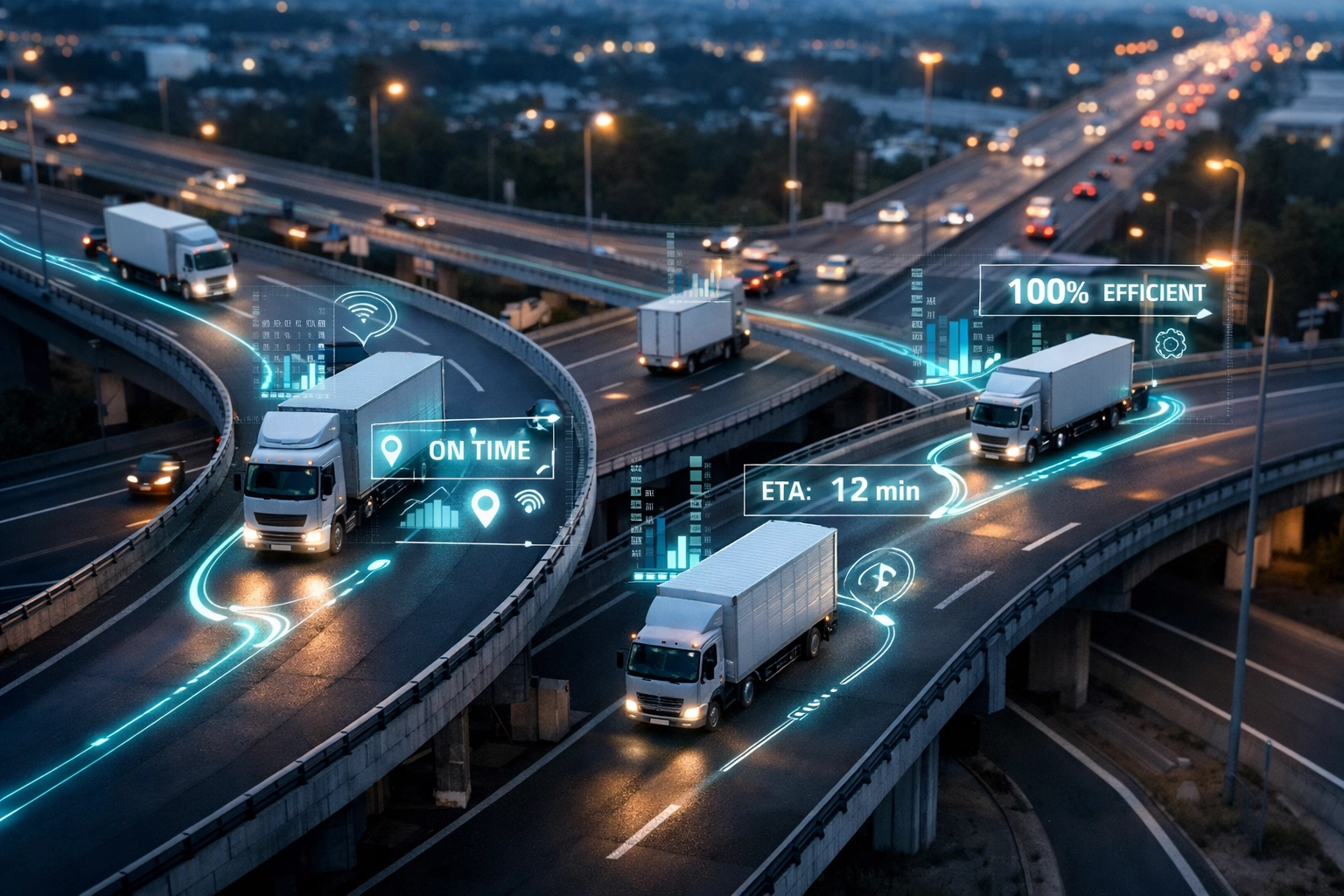
Here’s what happens when you integrate AI with your fleet telematics system: your operation shifts from reactive to predictive. And that shift translates directly to your bottom line.
Predictive Maintenance That Actually Prevents Breakdowns
AI monitors hundreds of data points from your vehicles simultaneously: engine performance, oil pressure, tire wear, brake temperature, and dozens more. It doesn’t just log this information. It learns normal patterns for each vehicle and detects anomalies before they become failures.
You’re no longer scheduling maintenance based on arbitrary mileage intervals. You’re fixing issues before they strand a driver on the side of the highway or force you to cancel customer deliveries. The system tells you: “Vehicle 47’s brake system shows early warning signs. Schedule maintenance within the next 200 kilometers.”
That’s the difference between a $300 brake job and a $3,000 accident.
Route Optimisation That Adapts While Your Drivers Are Moving
Static route planning is dead. AI analyses traffic patterns, weather conditions, delivery windows, vehicle capacity, and fuel efficiency in real-time. When an accident closes a highway or a customer pushes back their delivery window, the system automatically recalculates the most efficient route for every vehicle in your fleet.
You’re not paying drivers to sit in traffic. You’re not burning fuel on inefficient routes. And you’re definitely not getting angry calls from customers wondering where their delivery is.
Driver Safety That Goes Beyond Speed Alerts
Traditional telematics might flag harsh braking or speeding. AI takes it several levels deeper. It identifies patterns that lead to accidents: like a driver who consistently takes turns too fast or one who’s showing signs of fatigue based on micro-movements.
Advanced systems with fleet camera systems can detect distracted driving in real-time, sending immediate coaching alerts to drivers. Some platforms even use AI to analyse facial expressions and eye movements, identifying drowsiness before it becomes dangerous.
Your insurance premiums drop. Your accident rates plummet. And most importantly, your drivers get home safe every night.
How to Actually Integrate AI With Your Fleet System (The Practical Steps)
Let’s talk implementation. Because buying an AI solution is the easy part: integrating it properly is where most fleets either succeed spectacularly or waste a lot of money.
Step 1: Assess Your Current Data Infrastructure
Before you invest in AI, you need to understand what data you’re already collecting and how it’s structured. AI systems need clean, consistent data to function properly. If your telematics hardware is outdated or your data storage is fragmented across multiple platforms, that’s your starting point.
Most modern AI telematics platforms are agnostic: they can integrate with existing hardware or third-party data sources. But you need to know what you’re working with. Run an audit of your current systems, identify gaps, and prioritize compatibility.
Step 2: Ensure Your IoT Devices Are AI-Ready
AI thrives on rich, real-time data streams. Your system architecture needs to support seamless integration with IoT devices collecting vehicle data: engine diagnostics, fuel levels, tyre pressure, temperature sensors, and more.
If your vehicles aren’t equipped with modern telematic devices that communicate continuously, you’ll need to upgrade. The investment pays for itself quickly when you consider the operational improvements, but it’s a necessary foundation for AI integration.
Step 3: Build Your Data Pipeline and Cybersecurity Framework
Here’s where things get technical, but also critically important. AI systems need a robust data pipeline that feeds information from vehicles to the cloud to your analysis platform without interruption or security vulnerabilities.
As your fleet becomes increasingly connected, you’re also expanding your attack surface for cyber threats. Work with your IT team (or bring in outside experts if needed) to implement encryption, access controls, and monitoring systems that protect your fleet data. Some AI platforms actually enhance cybersecurity by detecting unusual patterns that might indicate a breach.
Step 4: Start With One High-Impact Use Case
Don’t try to transform everything overnight. Choose one area where AI will deliver immediate, measurable value: like predictive maintenance or fuel optimisation: and implement that first. Learn from the process, train your team, prove the ROI, then expand to additional use cases.
This phased approach reduces risk, builds internal buy-in, and lets you refine your integration strategy as you go.
Step 5: Train Your Team and Establish New Workflows
AI doesn’t replace your people: it empowers them to work smarter. But they need training on how to interpret AI-generated insights and act on recommendations. Your maintenance team needs to understand predictive alerts. Your dispatchers need to trust dynamic route optimization. Your safety managers need to know how to use behavior analysis data for coaching.
Build new workflows around AI capabilities. Update your standard operating procedures. And most importantly, communicate the “why” behind the change so your team embraces the technology instead of resisting it.
The Real-World Impact You’ll See (And When)
Once AI integration is complete, you’ll start seeing results faster than you might expect. Some benefits appear within weeks; others compound over months.
Immediate Improvements:
- Real-time route optimization reducing fuel costs by 15-20%
- Instant alerts on risky driving behavior preventing accidents
- Automated compliance monitoring eliminating hours of manual reporting
Medium-Term Benefits:
- Predictive maintenance reducing unplanned downtime by 30-40%
- Data-driven driver coaching improving safety scores across your fleet
- Optimized vehicle utilization increasing productivity per asset
Long-Term Transformation:
- Lower insurance premiums as your safety record improves
- Extended vehicle lifespan from proactive maintenance
- Competitive advantage from superior operational efficiency
The companies seeing the biggest impact aren’t just implementing technology: they’re using AI insights to fundamentally rethink how they run their fleets.
Stop Reacting. Start Predicting.
Traditional telematics tells you where your vehicles have been. AI tells you where they should go next, which ones need attention before they break down, and which drivers need coaching before they have an accident.
That’s not just an upgrade: it’s a complete transformation in how you manage your fleet. And in an industry where margins are thin and competition is fierce, it might be exactly what separates you from the operators who’ll be struggling to keep up.
Ready to see how AI can transform your fleet operations? Get in touch with our team to discuss integration options specific to your operation: or explore our telematics solutions to see what’s possible when intelligence meets real-time data.