
![[HERO] Fuel Prices are Biting: How Fleet Telematics Systems Help You Save](https://cdn.marblism.com/lPfplNFaEa-.webp)
When was the last time you looked at your monthly fuel statement without flinching? If you are managing a fleet in Australia today, the answer is likely “not recently.” As we move through March 2026, the volatility in global oil markets hasn’t just become a headline: it’s become a persistent drain on your bottom line.
Are you simply accepting these rising costs as an “unavoidable expense,” or are you looking for the leaks in your operational bucket?
The reality is that while you can’t control the price at the pump, you have absolute control over how much of that expensive liquid is actually being used for productive work versus how much is being wasted. This is where fleet telematics systems move from being a “nice-to-have” gadget to an essential financial shield for your business.
Why is Fuel Still Your Biggest Headache in 2026?
We’ve all seen the numbers. Between geopolitical shifts and the slow transition to alternative fuels, diesel and petrol prices have remained stubbornly high. For many Australian fleet managers, fuel now accounts for nearly 30% of total operating costs.
But here is the question that should be ringing alarm bells: How much of that fuel never actually contributes to a delivery or a service call?
Without a robust GPS fleet management system, you are essentially flying blind. You might know your total spend, but do you know why Vehicle A is burning 15% more than Vehicle B on the same route? If you can’t answer that, you aren’t managing your costs; you’re just paying the bills.

Is Your Fleet Literally Burning Money at a Standstill?
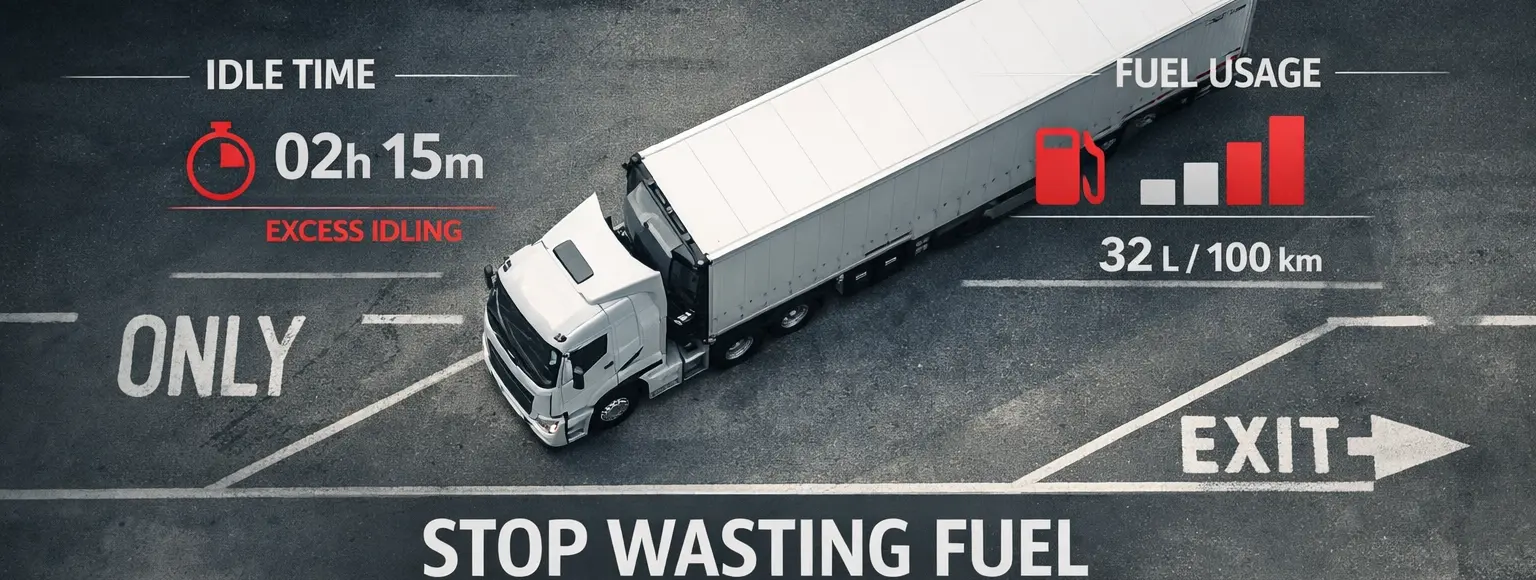
One of the most significant, yet invisible, fuel wasters is excessive idling. It’s easy for a driver to leave the engine running while checking paperwork, grabbing a coffee, or waiting at a loading dock. They might think, “It’s only a few minutes,” but across a fleet of twenty vehicles, those minutes aggregate into thousands of dollars of wasted capital every month.
Research indicates that telematics monitoring can reduce idle time by nearly 40%. Large vehicles can burn several liters of fuel per hour just sitting still. By setting up real-time alerts through telematics software, you can identify “idling hotspots” and coach your drivers to turn off the ignition when the vehicle isn’t moving.
If you aren’t tracking idle time, you are essentially letting your profits evaporate into the atmosphere.
How Much is a “Lead Foot” Costing Your Business?
We’ve all heard the term “drive it like you stole it.” While your drivers are professional, the pressure of tight schedules often leads to habits that are toxic to fuel efficiency. Harsh acceleration, excessive speeding, and late braking don’t just increase the risk of accidents; they are the primary drivers of fuel inefficiency.
Consider these metrics:
- Speeding: Aerodynamic drag increases significantly at higher speeds. Driving at 110 km/h instead of 100 km/h can increase fuel consumption by up to 10% for heavier vehicles.
- Harsh Maneuvers: Rapidly bringing a multi-tonne vehicle up to speed requires a massive burst of energy. Repeating this at every green light is a recipe for a massive fuel bill.
By utilizing fleet driver ID and behavior monitoring, you can create a culture of “smooth” driving. When drivers know their performance is being measured: and perhaps tied to incentives: their behavior changes. It’s not about “spying”; it’s about professional standards that protect the company’s viability.

Are Your Routes as Efficient as You Think They Are?
“The shortest distance between two points is a straight line,” but in the real world of Australian logistics, the shortest distance is often blocked by roadworks, school zones, or peak-hour congestion in Sydney or Melbourne.
If your drivers are relying on basic consumer GPS or, worse, their own intuition, they are likely clocking “empty miles.” These are miles driven that don’t generate revenue. Fleet telematics allows for sophisticated route optimization that accounts for real-time traffic data and historical patterns.
By ensuring your vehicles take the most efficient path: and that jobs are dispatched to the closest available unit: you reduce the total kilometers travelled. In a world where fuel is hovering at record highs, every kilometer saved is a direct win for your EBITDA.
Is Poor Maintenance Dragging Down Your MPG?
A vehicle that isn’t running at peak performance is a vehicle that is over-consuming fuel. A clogged air filter, under-inflated tires, or a faulty oxygen sensor can drop fuel efficiency by 5% to 20% without the driver even noticing a change in “feel.”
Telematics systems provide a direct window into the engine’s health through OBD-II or CAN-bus integration. Instead of waiting for a breakdown or a scheduled service date that might be too far away, you receive proactive alerts.
Maintaining a fleet is about more than just avoiding “the big bang” at the side of the road; it’s about ensuring that every combustion cycle is as efficient as possible. You can explore our fleet business insights to see how data-driven maintenance scheduling can transform your operational overhead.

Can You Spot Fuel Theft Before It Wipes Out Your Margin?
It’s an uncomfortable topic, but in times of high fuel prices, fuel shrinkage and unauthorized usage become more prevalent. Are your fuel card transactions matching up with the GPS location of the vehicle? Is a vehicle’s tank suddenly dropping by 50 liters in the middle of the night while parked in a depot?
Telematics provides the “digital breadcrumbs” needed to reconcile fuel spend with actual vehicle activity. When you can cross-reference fuel receipts with telematics data, the opportunities for “side-siphoning” or using company fuel for personal weekend trips virtually disappear.
The ROI of Telematics: Does the Math Work?
A common hesitation for fleet owners is the upfront cost of hardware and the monthly subscription. However, the ROI on fuel savings alone typically pays for the system within months.
If a telematics implementation helps you save just 10% on your fuel bill: which is a conservative estimate, given that some fleets see up to 20%: how much would that be worth to you annually? For a fleet spending $50,000 a month on fuel, a 10% saving is $60,000 back into the business every year. That’s not just a “saving”; that’s enough to hire a new staff member or upgrade a vehicle.
Moreover, the environmental savings associated with burning less fuel are becoming increasingly important for corporate social responsibility (CSR) and attracting Tier 1 contracts that require “green” reporting.
Why “Wait and See” is a Dangerous Strategy
The “wait and see” approach to fuel costs is a luxury that modern fleet managers can no longer afford. Every day you operate without visibility into your fuel usage is a day you are leaving money on the table.
Telematics isn’t just about “dots on a map.” It’s about converting raw data into actionable intelligence. It’s about knowing that when a driver is speeding or idling, you have the tools to intervene. It’s about knowing that your routes are optimized and your vehicles are healthy.
In 2026, the competitive edge goes to the fleet that is the most efficient, not necessarily the one with the most trucks.
Ready to Take Control of Your Fuel Costs?
If you are tired of being held hostage by global fuel prices, it’s time to change the way you manage your fleet. At My Fleet, we specialize in providing the technology and the insights that help Australian businesses thrive in challenging economic climates.
Whether you are looking for fleet camera systems to improve safety or comprehensive telematics software to slash your fuel spend, we are here to guide you.
Don’t let your profits leak away. Take the first step toward a leaner, more efficient fleet today.
- Explore our solutions: My Fleet Solutions
- Get a tailored quote: Enquire about Fleet Telematics
- Talk to an expert: Contact Us