
What if your dashcam could do more than show you what happened after a crash?
What if it could warn your driver about the crash risk while there is still time to react?
For years, dashcams have been treated primarily as insurance tools. They record the road, store the footage and provide evidence when something goes wrong. That evidence remains valuable, particularly when you need to defend your driver against a false claim.
But the latest generation of AI dashcams changes the purpose of the technology.
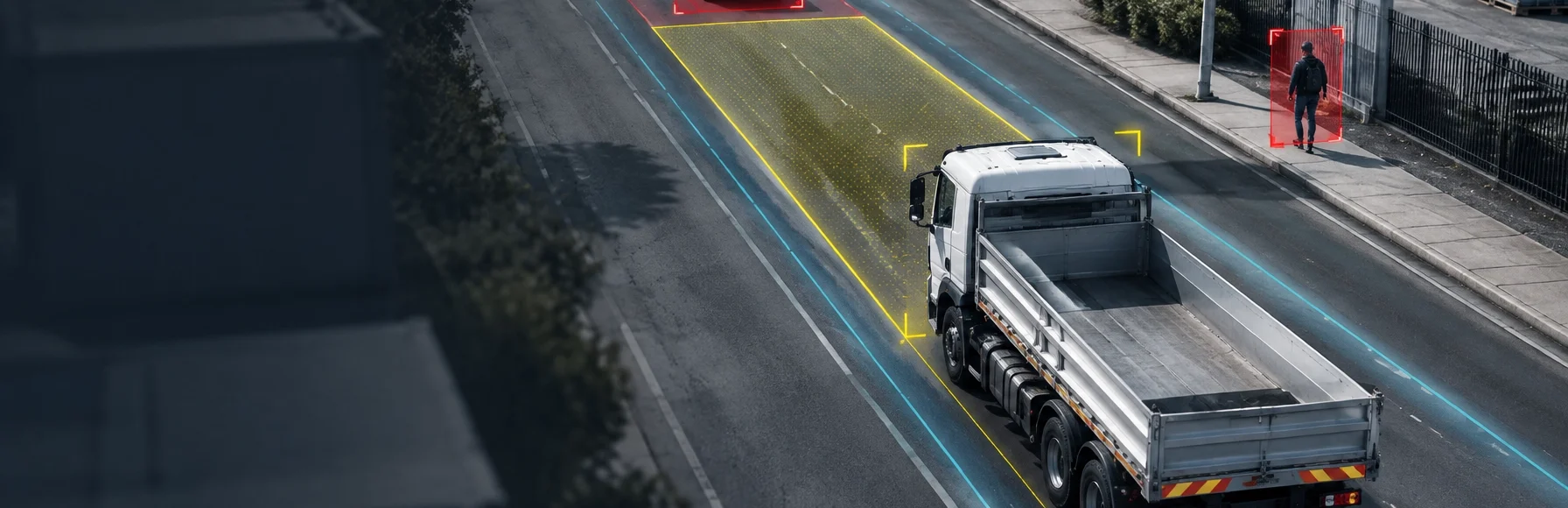
Instead of simply recording accidents, modern systems help prevent them. They identify fatigue, distraction, mobile phone use, unsafe following distances, lane departure and pedestrians in real time. They alert the driver before a risky moment becomes an incident.
That shift, from accident recorder to accident prevention system, is one of the biggest changes in fleet camera technology in the past decade.

Was your dashcam designed to prevent a crash, or explain one afterwards?
Traditional dashcams are passive devices. They capture footage continuously or when triggered by an event such as harsh braking, a collision or sudden acceleration.
After an incident, you or your insurer can retrieve the footage and work out what happened.
Was another vehicle at fault? Did your driver have a clear view? Did the incident occur because a pedestrian stepped into the vehicle’s path? Video provides an objective record, helping you resolve disputes and protect your business.
That is important. However, the camera only becomes useful after the event has already happened.
The accident recorder is reactive. It helps you argue the case afterwards, but it does not give your driver an extra second to brake, steer or refocus their attention.
AI-powered video telematics works differently.
How does edge AI turn a camera into a prevention system?
The key change is edge AI.
In simple terms, edge AI means the intelligence sits inside the camera or in-vehicle device. The system processes video on the vehicle rather than sending every frame to the cloud for someone to review later.
That matters because risk develops in real time.
A driver glances down at a phone. Their eyes remain off the road for several seconds. A truck ahead slows suddenly. A pedestrian enters a blind spot. A driver begins to drift from their lane.
An edge AI camera can identify these patterns as they happen and trigger an alert immediately. The driver receives an audible or visual warning while there is still an opportunity to self-correct.
Cloud platforms remain important for storing footage, generating reports and supporting coaching. But the first response needs to happen inside the vehicle. Waiting until the footage uploads after the event defeats the purpose of prevention.
What does ADAS see before your driver does?
Advanced Driver Assistance Systems, or ADAS, look outward from the vehicle.
Depending on the system, ADAS can monitor:
- Forward collision risks
- Unsafe following distances and tailgating
- Lane departure
- Vehicles entering the blind spot
- Pedestrians and vulnerable road users
- Sudden changes in traffic conditions
- Harsh braking and other high-risk manoeuvres
Consider a heavy vehicle travelling behind another truck in wet conditions. The following distance gradually closes, but the driver may not notice immediately. A forward-facing AI camera can detect the reduced gap and issue a warning.
That warning does not take control away from the driver. It gives them information at the point when information is most valuable.
Even one or two seconds can make a meaningful difference to stopping distance, particularly when you are operating a fully loaded truck.
For worksite, waste, civil construction and council fleets, pedestrian detection is equally important. Your vehicles often operate around people, plant, parked cars and changing site conditions. A multi-camera system can monitor the front, rear and sides of the vehicle, creating detection zones around areas the driver cannot easily see.
My Fleet’s fleet camera systems support AI-powered event detection, pedestrian collision alerts, live footage, GPS tracking and multiple camera configurations for greater visibility.
What happens when the camera looks inside the cab?
ADAS looks outside. Driver Monitoring Systems, or DMS, look inside.
A driver-facing camera can identify behaviours and signs of impairment that may not be visible through GPS data alone, including:
- Fatigue and drowsiness
- Yawning and microsleep indicators
- Gaze-off-road and visual distraction
- Mobile phone use
- Smoking
- Seatbelt non-compliance
- Unsafe driver positioning
Fatigue deserves particular attention in heavy vehicle operations. Long shifts, early starts, night work and repetitive driving can gradually reduce alertness. A driver does not always recognise how impaired they have become, and a fleet manager may not know there is a problem until an incident occurs.
A DMS can detect behaviours such as prolonged eye closure, head position and gaze direction. It can then issue an audible or visual alert inside the cab.
The purpose is not to punish the driver. It is to interrupt the moment before fatigue or distraction becomes a collision.

What do the numbers say about prevention?
Results vary by fleet, vehicle type, route, driver coaching process and the specific AI detections enabled. No responsible provider should promise that one camera will eliminate collisions.
However, published research and industry deployments show a consistent pattern: video telematics can materially reduce risky behaviour and collision costs when the technology is combined with timely alerts and structured coaching.
Reported outcomes include:
- Collision reductions ranging from 40% to 86% in fleets using video-based safety programmes
- Up to an 80% reduction in distraction events
- Reported fatigue reductions of approximately 41% to 60% in some high-risk sectors
- Around a 65% improvement in overall driver safety
- Approximately a 61% reduction in false insurance claims
These figures should be treated as benchmarks, not guarantees. Your results depend on how well your system is configured and what you do with the information it produces.
The principle is straightforward: the accident you prevent is worth more than the claim you successfully defend.
What else improves when collisions decrease?
The safety benefit is the obvious outcome, but it is not the only one.
Fewer collisions can also mean:
- Less vehicle downtime
- Lower repair and replacement costs
- Reduced pressure on insurance premiums
- Fewer missed delivery windows
- Fewer rejected loads
- Less disruption to customers and operations
- Lower risk of driver injury and trauma
- Improved driver retention
- Better evidence for incident investigations
Prevention and exoneration are not competing benefits. They work together.
Your AI dashcam can warn a driver about an unsafe following distance, but it can also provide clear footage if another road user causes a collision. Prevention sits in front of evidence; it does not replace it.
Are your drivers being protected, or watched?
Some drivers understandably worry that in-cab cameras create a “Big Brother” environment.
The implementation matters.
If you use every alert as a reason to reprimand someone, drivers are more likely to resist the system or feel that it is designed to catch them out. If you use the technology to give drivers timely warnings and fair, evidence-based coaching, adoption is much stronger.
The most effective approach is to:
- Explain what the system detects and why.
- Tell drivers when alerts occur and what they should do.
- Use events to identify trends rather than obsess over one-off mistakes.
- Coach recurring risks with specific footage and practical advice.
- Recognise improvement, not just non-compliance.
- Maintain clear policies around privacy, access and footage retention.
Your goal is not to spy on drivers. It is to give them a second chance to correct a risky behaviour before it causes harm.
Can AI dashcams support Chain of Responsibility compliance?
Under the Heavy Vehicle National Law and Chain of Responsibility obligations, your business needs to identify and manage transport safety risks. That includes risks involving fatigue, speed, scheduling, driver behaviour and vehicle operation.
A policy stating “drivers must not use mobile phones” is useful, but it is not the same as demonstrating that your business monitors risk and acts when breaches occur.
A prevention-focused video telematics system can help you create a stronger evidence trail:
- The camera identifies a risk.
- The driver receives an immediate alert.
- The event is recorded with time and vehicle context.
- A manager reviews the event where appropriate.
- Coaching, training or operational changes are completed.
- The action is documented for future review.
My Fleet’s fleet safety and compliance solution combines real-time alerts, event reporting, risk analysis and AI camera intervention to help you move from passive record-keeping to active risk management.
It can also support your WHS responsibilities by helping protect your drivers while they carry out their work.
What should you look for when choosing an AI dashcam?
Not every camera described as “AI-enabled” provides the same value. Before investing, check whether the system includes:
- Edge AI processing for real-time detection
- Dual-facing coverage, with both ADAS and DMS
- Audible and visual in-cab alerts
- Detection for fatigue, distraction, mobile phone use and seatbelt compliance
- Forward collision and unsafe following-distance warnings
- Pedestrian and vulnerable road-user detection
- Multi-camera support for heavy vehicles, trailers and worksite equipment
- Compatibility with Australian mobile networks, including Band 28 for regional coverage
- GPS and vehicle data integration in the same platform
- Secure cloud access with controlled user permissions
- Clear privacy, retention and driver notification controls
- Local technical support and Australian-based technicians
- Data hosting and security arrangements suited to your organisation
You should also assess total cost of ownership. A cheap offshore camera may appear attractive until you factor in installation issues, limited support, replacement delays, separate software platforms and uncertain data access.

Is it time to upgrade from recording incidents to preventing them?
A dashcam still has an important role in protecting your business after an incident. But if you are buying one only for insurance evidence, you may be using yesterday’s logic to solve today’s safety risks.
Modern video telematics gives you more than footage. It gives your driver an immediate warning, your manager a clearer understanding of risk and your business a practical way to reduce preventable incidents.
My Fleet combines GPS fleet management, video telematics with AI driver monitoring and pedestrian detection, BLE connectivity and cold-chain capabilities in one Australian platform. With local support, Australian-based technicians and Australian data hosting, you can build a system around the way your fleet actually operates.
Explore My Fleet’s camera systems or contact the team to discuss the right prevention-focused solution for your vehicles, drivers and operating environment.