
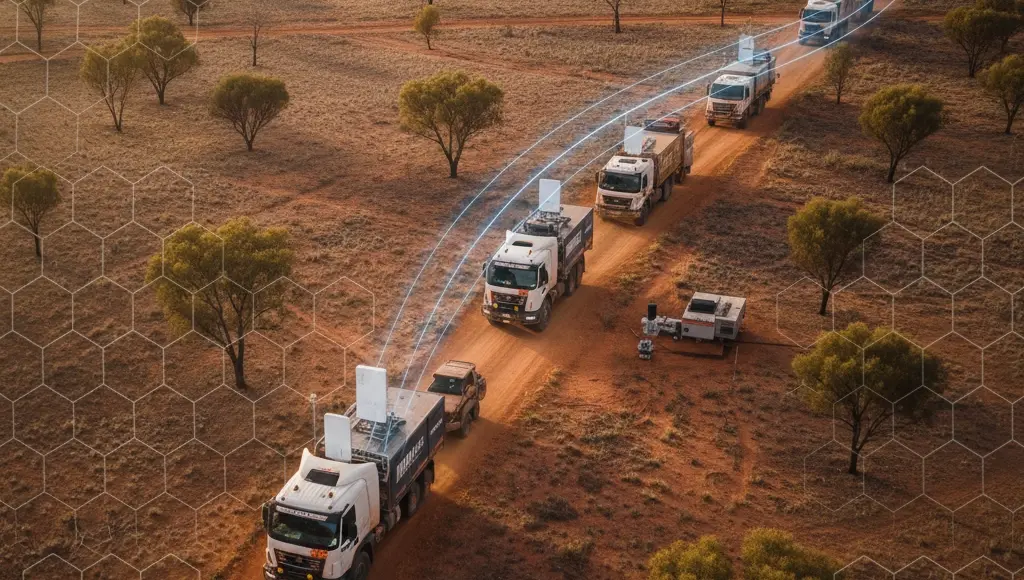
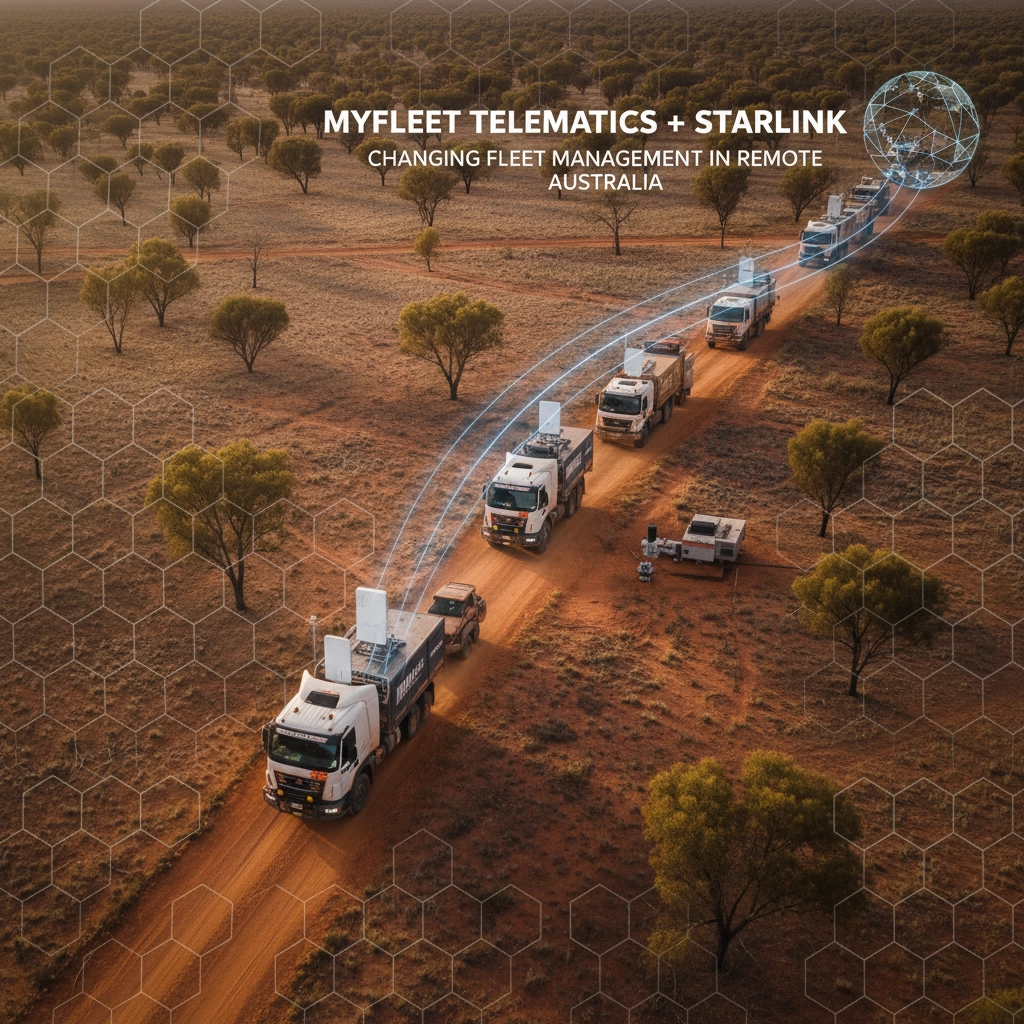
Ever tried tracking a truck convoy crossing the Nullarbor Plain? Or monitoring mining equipment in the remote Pilbara region? If you’re managing a fleet that regularly ventures beyond Australia’s mobile coverage zones, you know the frustration of losing visibility on your most valuable assets right when you need it most.
For decades, remote fleet operations across Australia have been flying blind. Your drivers disappear into connectivity black holes, your GPS trackers go silent, and you’re left crossing your fingers that everything’s running smoothly hundreds of kilometres away. But that’s all changing thanks to a game-changing partnership between MyFleet Telematics and Starlink satellite technology.
The Remote Australia Challenge: Why Traditional Fleet Tracking Falls Short
Australia is massive – we’re talking about 7.7 million square kilometres with some of the world’s most remote industrial operations. Whether you’re running mining logistics, agricultural transport, or long-haul freight across the continent, you’ve likely experienced these headaches:
Your fleet tracking system works perfectly around major cities, then goes dark the moment your vehicles hit remote highways. Driver safety becomes a guessing game when you can’t monitor their location or driving behaviour in real-time. Breakdowns in the middle of nowhere turn into expensive rescue missions because you don’t know where your assets are located.
Emergency response times stretch from hours to days when communication systems fail in remote areas. Fuel theft and unauthorised vehicle use go undetected in areas without cellular coverage. You’re making critical business decisions based on outdated information that’s hours or even days old.
The numbers tell the story – traditional mobile networks cover less than 30% of Australia’s landmass, leaving vast areas where standard fleet tracking systems simply can’t function. For companies operating 10 or more vehicles across remote routes, this connectivity gap has meant accepting significant operational blind spots as the cost of doing business.
How MyFleet and Starlink Are Rewriting the Rules
Here’s where things get interesting. MyFleet Telematics has integrated with Starlink’s revolutionary Direct-to-Cell satellite technology, creating Australia’s first truly comprehensive remote fleet management solution. This isn’t your grandfather’s satellite phone system – it’s a seamless integration that automatically switches between terrestrial mobile networks and satellite connectivity without any intervention from you or your drivers.
The breakthrough comes through advanced telematics devices that combine MyFleet’s comprehensive tracking capabilities with built-in satellite connectivity. When your vehicle moves beyond mobile tower coverage, the system automatically connects to Starlink’s low-earth orbit satellite constellation, maintaining full tracking functionality regardless of location.
This means you get real-time GPS positioning, engine diagnostics, fuel consumption monitoring, and driver behaviour analysis whether your fleet is navigating Sydney traffic or crossing the Great Victoria Desert. The transition between cellular and satellite is completely automatic – your dashboard continues displaying live data without interruption.
Real-World Applications: Where This Technology Shines
Let’s talk about practical scenarios where MyFleet and Starlink integration delivers immediate value for your operations.
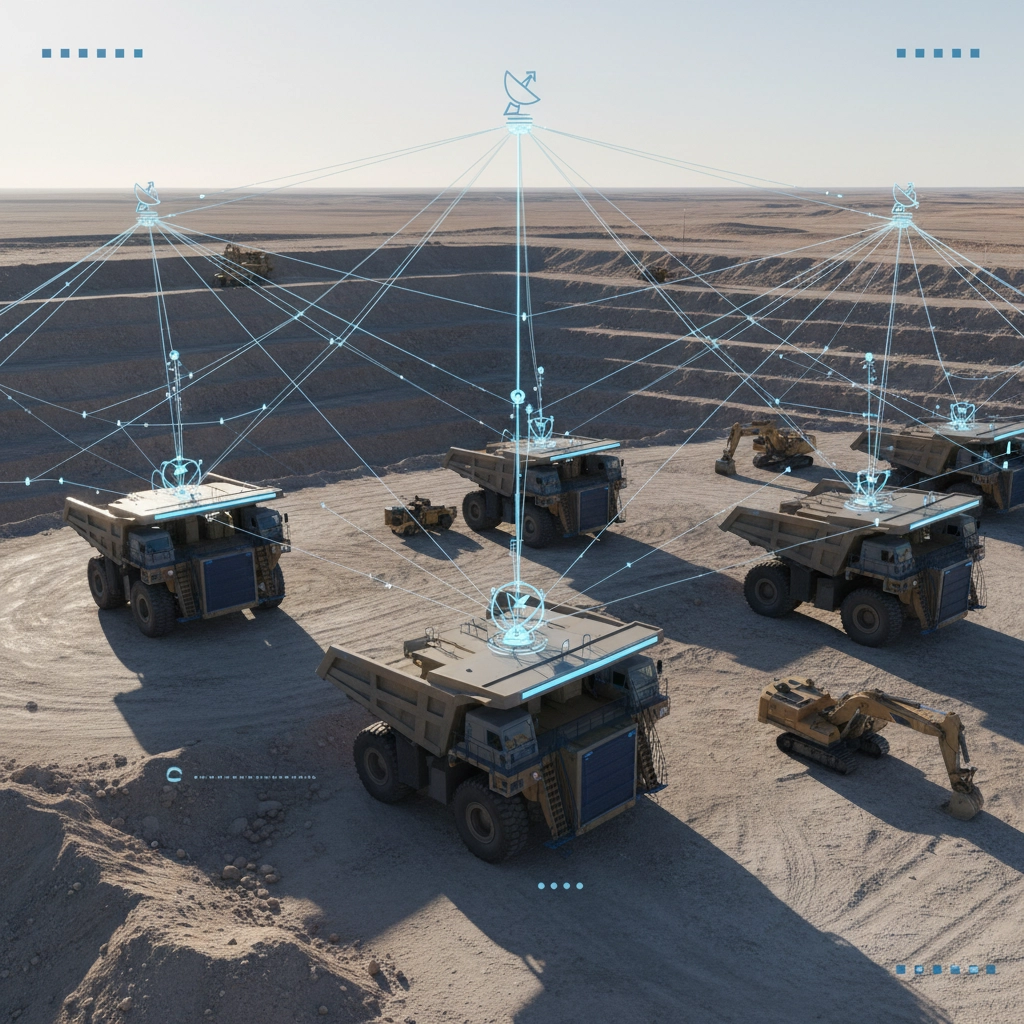
Mining and Resources Transport: Your heavy haulage trucks moving equipment to remote mine sites stay fully monitored throughout their journey. You can track precise locations, monitor engine performance for early maintenance alerts, and ensure driver safety compliance even in areas hundreds of kilometres from the nearest town.
Agricultural Logistics: Grain transport during harvest season across remote farming regions maintains full visibility. You’ll know exactly when trucks are loaded, their route efficiency, and expected delivery times, enabling better coordination with storage facilities and reducing costly delays.
Long-Haul Freight: Cross-continental freight movements between major cities get complete journey tracking. Your dispatchers can provide accurate ETAs to customers, reroute vehicles around road closures, and respond quickly to breakdowns or emergencies regardless of location.
Construction and Infrastructure: Remote construction projects in areas like the Pilbara or central Queensland maintain full equipment visibility. You can monitor equipment utilisation rates, prevent unauthorised use, and ensure worker safety across isolated job sites.
The Operational Benefits You’ll Actually Notice
Beyond solving connectivity problems, this technology combination delivers tangible improvements to your daily operations. Here’s what you can expect to see within the first few months of implementation.
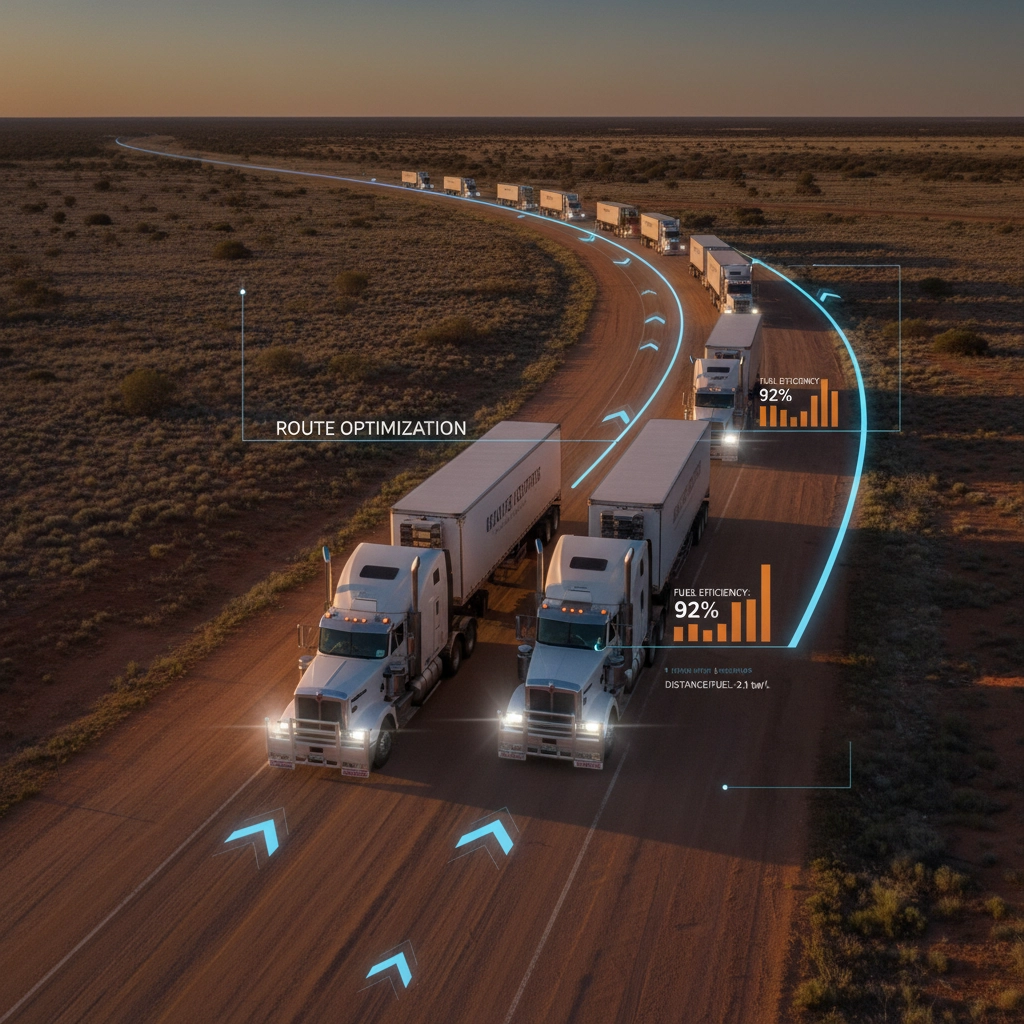
Your fuel costs will drop through better route optimisation and idle time monitoring. The system identifies the most efficient routes between remote locations and flags excessive idling or aggressive driving behaviours that waste fuel. For a 20-vehicle fleet, this typically translates to 10-15% fuel savings within the first year.
Maintenance costs decrease through predictive monitoring that catches problems early. Engine diagnostics, temperature readings, and performance metrics help you schedule maintenance during planned downtime rather than dealing with expensive breakdowns in remote locations. This is particularly valuable when your nearest service centre might be hundreds of kilometres away.
Driver safety improves significantly with continuous monitoring capabilities. The system tracks speed, harsh braking, rapid acceleration, and fatigue indicators, enabling proactive coaching and reducing accident risk. In remote areas where emergency response times are extended, this safety monitoring becomes critical.
Insurance premiums often decrease when insurers see your comprehensive risk management capabilities. Many insurers offer discounts for fleets using advanced telematics systems, particularly those operating in high-risk remote environments.
Video Telematics: Your Eyes on Remote Operations
One of the most powerful aspects of this technology integration is video telematics capability in previously unreachable locations. Dashboard cameras and external vehicle cameras can now stream live footage and upload incident recordings even from the most remote locations across Australia.
This capability transforms incident management and driver training. When an incident occurs hundreds of kilometres from civilisation, you have immediate access to video evidence for insurance claims and investigation purposes. You can review driver performance in real-time and provide targeted coaching based on actual footage rather than guesswork.
For fleet managers, this means faster insurance claim resolution, reduced liability exposure, and improved driver accountability. The psychological effect alone – knowing that monitoring is continuous regardless of location – tends to improve driver behaviour across your entire fleet.
Implementation: Easier Than You’d Expect
You might assume that satellite-enabled fleet tracking requires complex installations and ongoing technical support. The reality is quite different. Modern integrated systems are designed for straightforward deployment across existing fleet operations.
Installation typically takes under an hour per vehicle and can be handled by your regular maintenance team or through MyFleet’s network of certified technicians across Australia. The devices are compact, weatherproof, and designed to withstand the harsh conditions common in remote Australian operations.
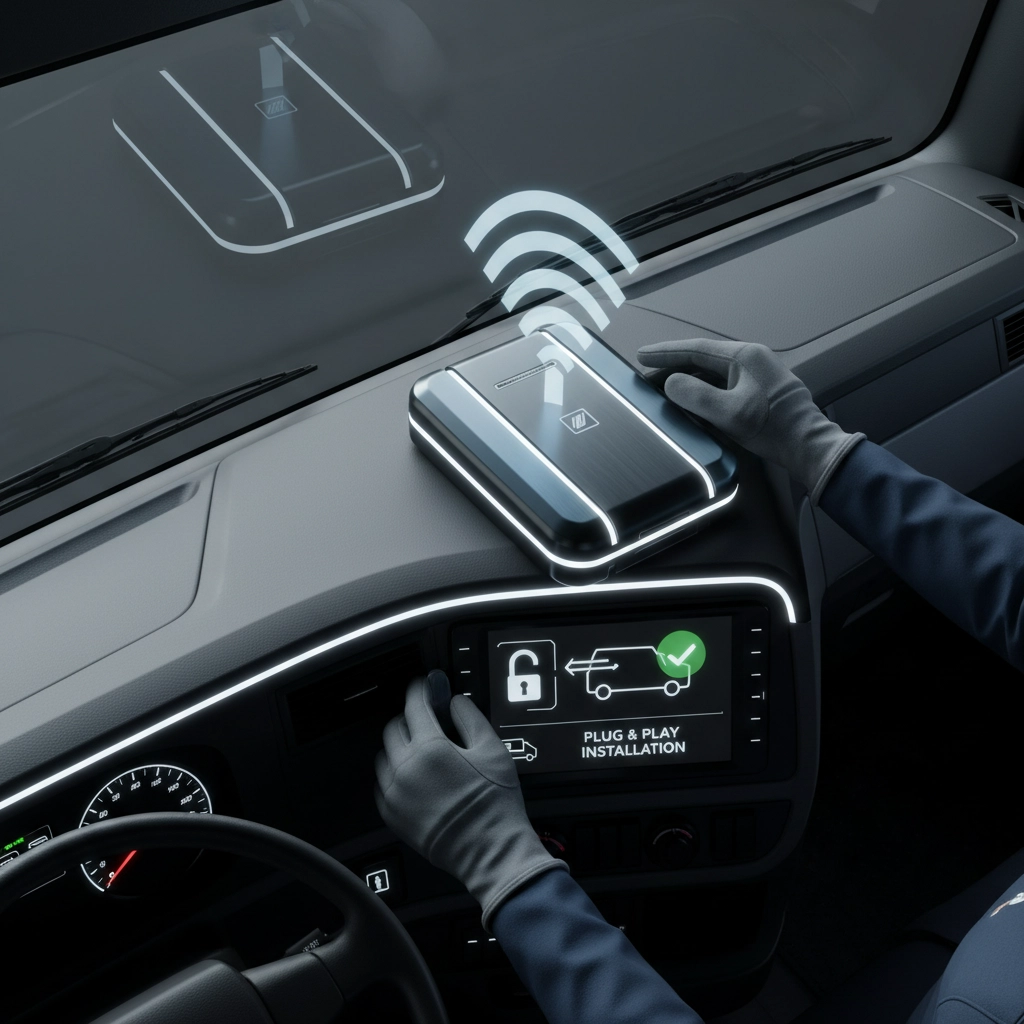
The system integrates with your existing fleet management processes through familiar dashboard interfaces. Your dispatchers and fleet managers don’t need extensive retraining – they’re working with the same reporting tools and alerts they’re already using, just with extended coverage areas.
Ongoing costs are predictable and often lower than you’d expect, particularly when weighed against the operational improvements and risk reduction you’ll achieve. Many fleet operators find that fuel savings alone offset a significant portion of the technology investment.
What This Means for Your Business Planning
If you’re currently managing fleet operations that regularly venture into remote areas, or you’re considering expanding your service areas, this technology removes a major constraint from your planning process. Routes that were previously considered too risky due to communication limitations become viable operational options.
You can bid on contracts in remote locations with confidence, knowing you’ll maintain full operational visibility. Customer service improves dramatically when you can provide accurate, real-time delivery information regardless of your vehicles’ locations.
Risk management becomes more sophisticated and effective. Instead of hoping your remote operations run smoothly, you have continuous monitoring and immediate alert capabilities for any issues that arise.
The competitive advantage is significant. While competitors struggle with connectivity gaps and limited visibility in remote operations, you’re operating with the same level of control and monitoring you have in metropolitan areas.
Ready to eliminate the blind spots in your remote fleet operations? Contact MyFleet to discuss how integrated satellite connectivity can transform your fleet management capabilities across Australia’s most challenging environments. Your remote operations don’t have to operate in the dark anymore.